
History is filled with cycles of domination—sometimes from beyond borders, sometimes from within. International invasions and national intrusions are not isolated phenomena; they are recurring patterns that reveal humanity’s struggle with power, control, and survival. What makes them truly repetitive is the agony they impose on ordinary people, whose lives are shattered in the process.
International Invasion: Agony Across Borders
Throughout history, invasions have reshaped civilisations, but always at a human cost.
- The Norman Conquest of England (1066): William the Conqueror’s victory at Hastings brought new rulers, but for the English people it meant dispossession of lands, suppression of culture, and decades of unrest.
- Mongol Conquests (13th century): The Mongols expanded across Eurasia, leaving behind devastated cities and millions dead. The agony of survivors was not just physical but cultural, as entire traditions were uprooted.
- Colonial Expansion (15th–19th centuries): European powers invaded Asia, Africa, and the Americas, exploiting resources and enslaving populations. The agony here was the generational loss of sovereignty, identity, and dignity.
- Modern Interventions (20th–21st centuries): From Iraq to Afghanistan, invasions justified by ideology or security left civilians in ruins,
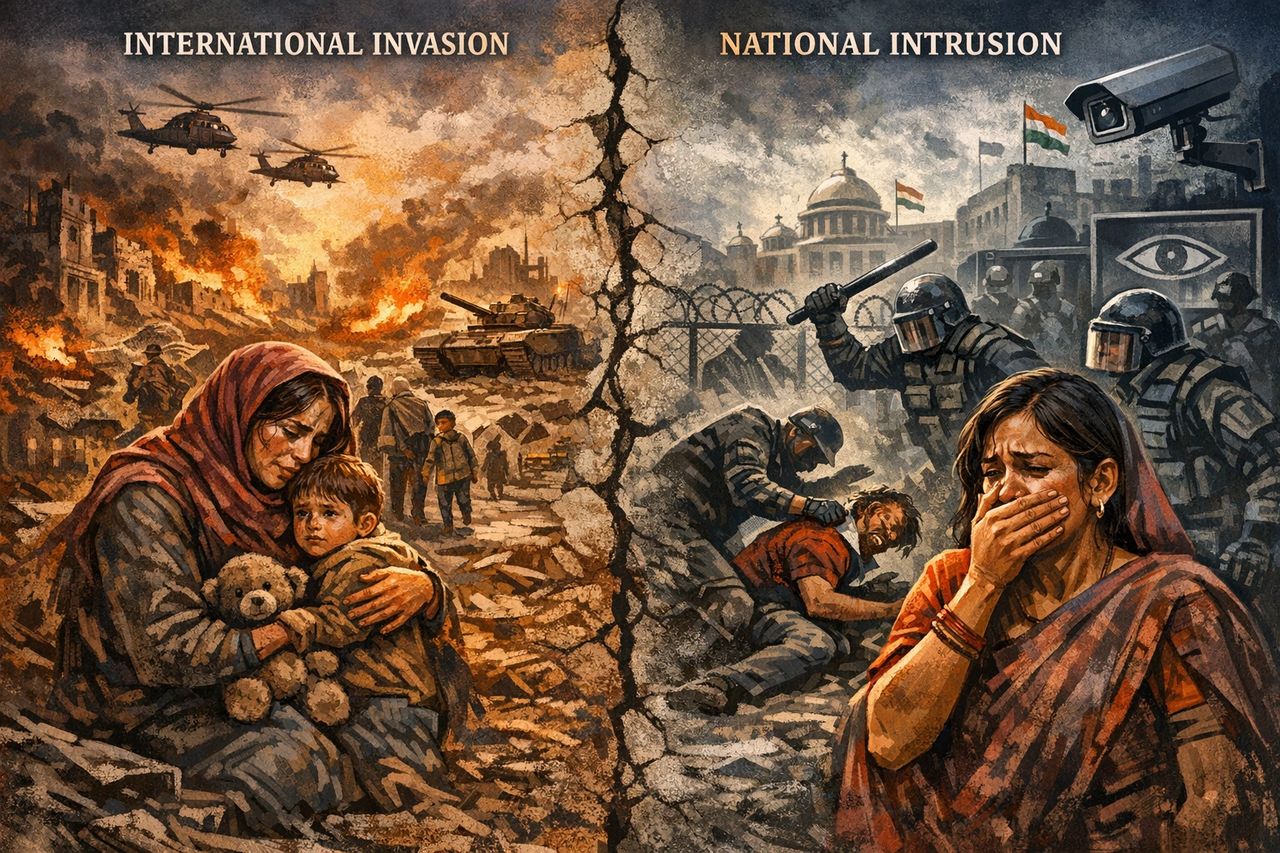
- facing displacement, trauma, and perpetual instability.
Recurring agony: Refugees fleeing homes, children growing up in rubble, and cultures silenced under foreign dominance.
National Intrusion: Agony Within Borders
If invasions are storms from outside, national intrusions are suffocating pressures from within.
- Medieval Monarchies: Feudal lords intruded upon local freedoms, taxing peasants and crushing dissent.
- Post-Colonial Authoritarianism: Many newly independent nations saw rulers intrude upon liberties, suppressing opposition in the name of unity.
- Modern Surveillance States: Governments today intrude through censorship, monitoring, and control of civil liberties. Citizens live under constant fear of punishment for dissent.
Recurring agony: The silencing of voices, the erosion of trust, and the despair of living under regimes that intrude upon private life.
The Repetition of History
The repetition lies not in identical events but in recurring motives and consequences:
- Motives: Expansion of influence, consolidation of power, fear of losing control.
- Methods: Military campaigns, propaganda, economic exploitation, surveillance.
- Consequences: Displacement, trauma, suppression, resistance.
Whether through international invasion or national intrusion, ordinary people bear the brunt. Their agony is the constant refrain of history.
Human Agony: The Silent Continuity
- Mothers mourning sons lost in wars they never chose.
- Children robbed of innocence, growing up amidst ruins.
- Citizens silenced, their voices drowned in propaganda or fear.
This agony is the true repetition of history. Empires rise and fall, regimes change, but the suffering of the common person remains constant.
Breaking the Cycle
History teaches us that power is transient, but agony is permanent. If humanity is to break this repetition, nations must learn to value dignity over domination.
- Internationally: Respect sovereignty, prioritise diplomacy over aggression.
- Nationally: Protect civil liberties, embrace diversity, and resist authoritarian impulses.
Only then can history stop rhyming in pain and begin to echo in progress.